
Games
Lie tips for Zentra
When to bluff, when to tell the truth and when to check in Lie, Zentra's bluffing card game.
Lie is about reading your opponent and making yourself hard to read. Good players mix truth and bluffs, and check for a reason, not on a feeling.
Telling the truth is a weapon
- If you hold a card you can claim truthfully, playing it honestly is safe: a check on a true card gives the checker the whole pile.
- Early on, honest plays punish an opponent who checks a lot. Let them pick up a few piles and they'll check less.
- Save your bluffs for when you have no true card to play, or when the pile under you is small.
When to bluff
- Bluff when the pile is small. If you're caught, you take back your card and everything under it. A small pile costs little.
- Claim cards that are likely to exist. You can see every card that's been turned up and remember what went into your opponent's hand. A claim of a card you know is gone is easy to catch.
- Don't claim the same card twice in a row. Your opponent is counting too.
- Bluffing a special card (1, 8, 14) gets you an extra turn, but a caught lie undoes it. Use them when the pile is small.
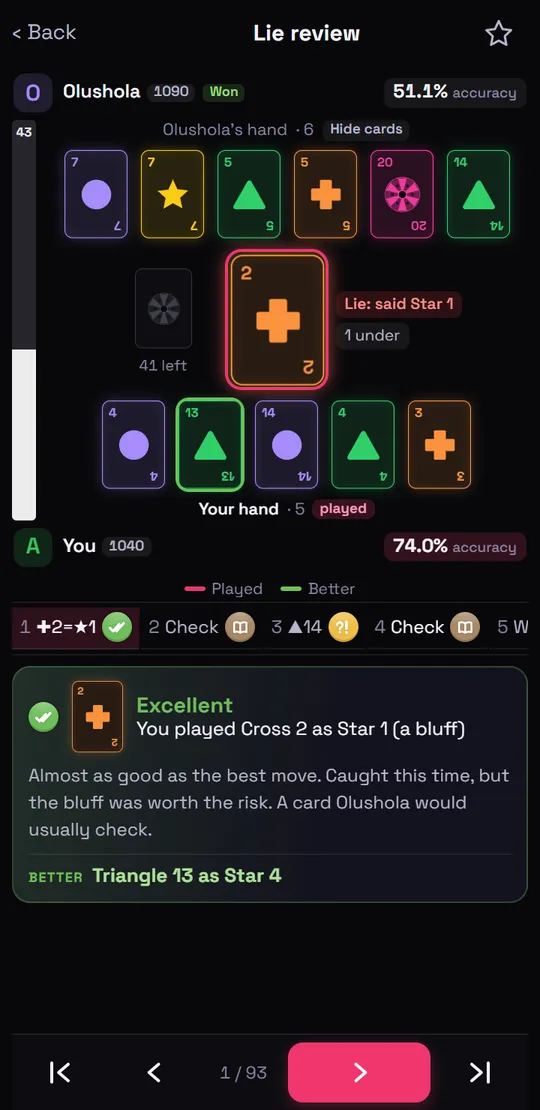
A screen from the Zentra app, with sample players and amounts.
When to check
- Check when the claim is unlikely: you hold several of that card yourself, or you've seen them played.
- Check less when the pile is big. If the card is true, you take the lot.
- Watch how often your opponent lies when caught. Some players bluff most cards. Some almost never do. Adjust to the player, not to an average.
- Always think hard about a last card. Letting a lie go loses the game. Checking a true one also loses, but checking a lie keeps you in it.
Managing your hand
- Going to market adds a card, but it can give you a true card for the claim you need.
- When a liar is caught, the table starts clear and the next player can claim anything. That's a good moment to play a card you've been stuck with.
The review of each Lie game shows which plays and checks were best. Back to the Lie rules.